Functional fitness exercises focus on improving your ability to perform daily activities with ease and efficiency. Unlike traditional workouts that isolate specific muscles, functional fitness exercises train multiple muscle groups to work together, mimicking real-life movements. By incorporating functional fitness exercises into your routine, you can enhance strength, balance, flexibility, and overall physical functionality. In this blog post, we will explore a range of functional fitness exercises designed to improve your everyday performance and support a healthier, more active lifestyle.
The Benefits of Functional Fitness Exercises:
Functional fitness exercises offer numerous benefits that extend beyond the gym. Here are some advantages of integrating functional movements into your fitness routine:
Improved Daily Functionality: Functional fitness exercises target movements that are essential for daily activities, such as bending, lifting, squatting, pushing, pulling, and twisting. By enhancing your functional strength, you can perform these tasks more efficiently and reduce the risk of injuries.
Enhanced Core Stability: Functional movements engage the core muscles, including the abdominals, back, and pelvis, which play a crucial role in providing stability and maintaining proper posture.
Increased Flexibility and Range of Motion: Functional exercises often involve dynamic movements that promote flexibility, joint mobility, and improved range of motion.
Injury Prevention: By training the body to move functionally and efficiently, you can minimize the risk of injuries during both everyday activities and sports or recreational pursuits.
Efficient Total-Body Workout: Functional fitness exercises engage multiple muscle groups simultaneously, providing a comprehensive full-body workout in less time.
Step-by-Step Functional Fitness Exercise Routine:
Follow this functional fitness exercise routine to enhance your daily functionality and overall fitness level:
Warm-up: Begin with 5-10 minutes of light cardio exercise, such as jogging or cycling, to increase blood flow and warm up your muscles.
Squats: Stand with your feet shoulder-width apart. Lower your body by bending your knees and pushing your hips back, as if sitting back into a chair. Keep your chest lifted and core engaged. Return to the starting position by extending your legs. Aim for 10-12 repetitions.
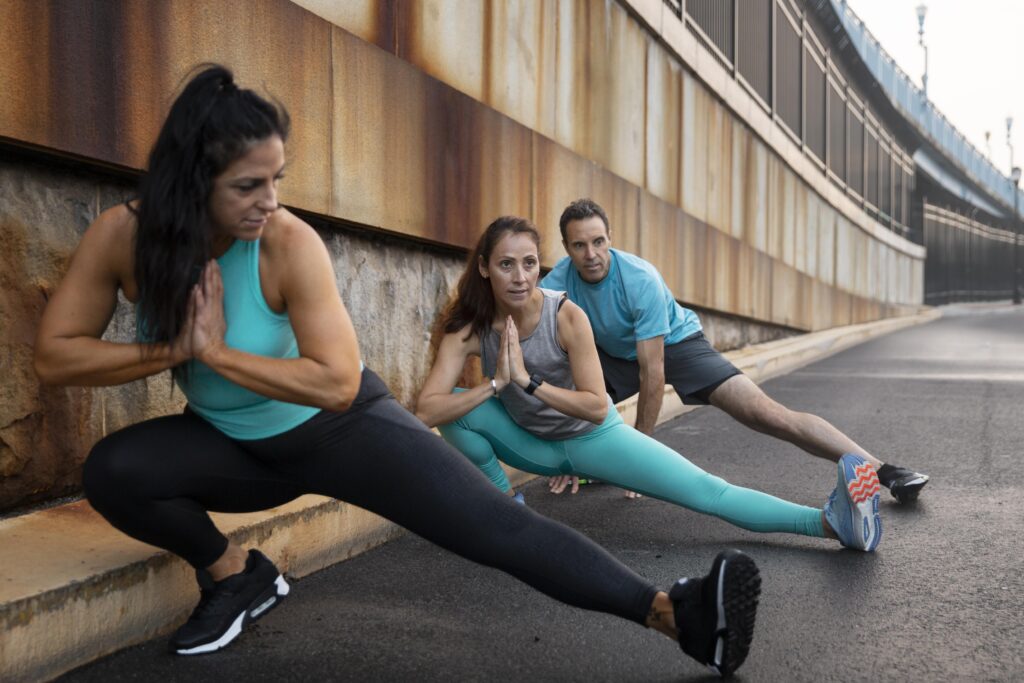
Lunges with Twist: Take a step forward with your right foot and lower your body into a lunge position. As you lunge, rotate your torso to the right, engaging your core and oblique muscles. Return to the starting position and repeat on the other side. Aim for 10-12 repetitions on each leg.
Push and Pull Exercises:
Push-ups: Start in a high plank position with your hands slightly wider than shoulder-width apart. Lower your body by bending your elbows, keeping your core engaged and your back straight. Push back up to the starting position. Modify by performing push-ups from your knees or against a wall.
Bent-Over Rows: Hold a pair of dumbbells or resistance bands with your palms facing your body. Hinge forward at the hips, keeping your back straight, and let your arms hang naturally. Bend your elbows and pull the weights or bands toward your torso, squeezing your shoulder blades together. Aim for 10-12 repetitions of each exercise.
Plank Variations:
Forearm Plank: Start on your forearms and toes, keeping your elbows directly under your shoulders. Engage your core and hold the position for 30 seconds to 1 minute, maintaining a straight line from your head to your heels.
Side Plank: Lie on your side with your forearm on the ground, elbow under your shoulder. Lift your hips off the ground, creating a straight line from your head to your feet. Hold for 30 seconds on each side.
Medicine Ball Woodchops: Stand with your feet shoulder-width apart, holding a medicine ball or weight with both hands. Bring the ball diagonally across your body, rotating your torso as you lower the ball toward the outside of your opposite knee. Return to the starting position and repeat on the other side. Aim for 10-12 repetitions on each side.
Cool-down: Conclude your workout with 5-10 minutes of gentle stretching, focusing on the major muscle groups targeted during your routine. This will help improve flexibility and aid in recovery. Functional fitness exercises provide a practical and effective way to improve your daily functionality, enhance strength, and prevent injuries. By incorporating regular functional movements into your fitness routine, you can build a solid foundation for overall fitness and enjoy a more active and functional lifestyle. So, embrace the diversity and benefits of functional fitness, challenge your body with multi-joint exercises, and experience the transformative power of training movements that truly matter.
#rugarsports#functionalfitness#qualityoflife